
Warren Buffett on the Art of Spotting Extraordinary Investments
Warren Buffett on
the Art of Spotting
Extraordinary Investments
In October 1998, Warren Buffett stood before a room of MBA students at the University of Florida for the inaugural lecture of the Graham-Buffett Teaching Endowment, a series funded by a $1 million gift from Mason Hawkins, a 1970 UF graduate who introduced Buffett simply as our lifetime's best long-term investor. The setting was intimate. Buffett held the microphone himself, opened with a joke about testing it, one million dollars, two million dollars, three million dollars, and then delivered what has become one of the most referenced investing talks in history.
What followed was not a polished keynote but a freewheeling Q&A covering everything from the Asian crisis to chewing gum, from Long-Term Capital Management's collapse to the emotional dynamics of Valentine's Day candy sales. But beneath the anecdotes and folksy humor, Buffett laid out a comprehensive philosophy on investing, character, and business that has proven extraordinarily durable. Every section contains a principle worth returning to decade after decade. He speaks in parables, about castles and moats, about buying ten percent of a classmate, about a gun with a million chambers, and each one encodes a deep structural insight about how wealth is really built and preserved.
The Four Pillars of a Great Investment
Before taking a single question about stocks, Buffett posed a deceptively simple thought experiment. Imagine you could buy ten percent of one classmate's future earnings for the rest of their life. You can't pick someone with a rich father, it has to be based purely on merit. Who would you choose? And then, to make it interesting: you also have to go short one classmate. Who do you sell?
The answer, Buffett argues, has nothing to do with intelligence. You wouldn't pick the highest IQ or the best grades. You'd pick the person you respond to, the one with leadership qualities, generosity, honesty, and the ability to give credit to others. And the person you'd short? The one who is egotistical, greedy, and slightly dishonest. The one who cuts corners and turns people off.
Traits You'd Buy
- Generous, gives credit to others freely
- Honest and consistent in all dealings
- Natural leadership, inspires people to follow
- Energy and initiative directed by integrity
- The person everyone admires most in the class
Traits You'd Short
- Egotistical and self-centered
- Greedy, cuts corners when no one is watching
- Slightly dishonest, stretches the truth
- Takes credit for other people's work
- Turns people off in ways that compound over time
The chains of habit are too light to be felt until they are too heavy to be broken.
Warren BuffettIn the fall of 1998, Long-Term Capital Management nearly brought down the global financial system. Buffett had a front-row seat, he was one of the potential rescue buyers, putting in a bid for $250 million in net assets with $3 billion from Berkshire, $700 million from AIG, and $300 million from Goldman Sachs. The story fascinated him not because it involved bad people, but because it involved some of the most brilliant people in the country making a completely avoidable mistake.
The Anatomy of a Catastrophe
Take the 16 LTCM partners. Among them: Larry Hillenbrand, Eric Rosenfeld, John Meriwether, and two Nobel Prize winners. As a group, they had as high an IQ as any 16 people working together in one business in the country. They had 300 to 400 years of combined experience doing exactly what they were doing. Most of them had most of their substantial net worth in the business. And they essentially went broke.
Their error was not intelligence but overconfidence. They believed that mathematical models captured reality, that a six-sigma event was essentially impossible. They used the Beta of the stock as a measure of risk. In Buffett's view, that tells you nothing about the risk of going broke.
Including two Nobel Prize winners
Of securities market experience
$3B Berkshire + $700M AIG + $300M Goldman
To make money they didn't have and didn't need, they risked what they did have and what they did need. That is just plain foolish, it doesn't matter what your IQ is.
Warren BuffettBuffett's stance on borrowing money is absolute and unequivocal. He never borrowed money, even when he had just $10,000 to his name. The logic is starkly simple: if you have $100 million and make 10% unleveraged versus 20% leveraged, the difference between $110 million and $120 million is utterly meaningless to your life. But the leveraged path carries the risk of ruin, and ruin means disgrace, humiliation, and facing friends whose money you've lost.
If you hand me a gun with a million chambers and one bullet in it, and I am paid to pull the trigger, it doesn't matter how much I would be paid. I would not pull the trigger. You can name any sum you want, but it doesn't do anything for me on the upside, and the downside is fairly clear.
Warren BuffettThe Book Title
- Walter Gutman wrote a book called "You Only Have to Get Rich Once"
- Buffett calls it a lousy book with a great title
- The principle is sound: once you have enough, the marginal utility of more money is negligible
- Yet people risk everything they need for what they don't need, routinely, without thinking
The Buffett Lifestyle Test
- Same clothes as his audience
- Same food, McDonald's, or better yet, Dairy Queen
- House that's warm in winter and cool in summer
- Nebraska football on a big-screen TV
- The only real difference: how they travel
Buffett tells the story of meeting a 28-year-old Harvard MBA who had already accomplished a great deal, and planned to work for a consulting firm next, purely because it would look good on his resume. Buffett's reply was blunt: that's like saving up sex for your old age. You're 28. You have a resume ten times better than anyone. When are you going to start doing what you actually want?
The advice comes from personal experience. After graduating from Columbia Business School, Buffett wanted to work for Ben Graham immediately, for free if necessary. Graham turned him down initially, saying he was overpriced. Buffett kept pestering him, sold securities for three years, and finally got the job. It was the formative experience of his career, and he would have missed it entirely if he'd been resume-optimizing.
Jump Out of Bed
Take a job that you'd take if you were independently wealthy. You will learn something, you will be excited, and you will jump out of bed in the morning. You can't miss.
The Money Trap
If you think making 2x will make you happier, you're mistaken. If you think 10x or 20x will do it, you'll borrow money and cut corners, and you won't like where that leads.
Forget the Resume
Don't take a job because you think it will look good on your resume. Start doing what you want. Start doing what you love. The starting salary is irrelevant.
Buffett's most famous metaphor, deployed right here in Gainesville. He wants a business with a very valuable castle in the middle, a competent and honest duke running it, and a wide moat protecting it from invaders. Every day, the duke should be widening the moat, throwing crocs, sharks, and gators into it to keep competitors away. That comes about through service, product quality, cost, patents, or real estate location.
Low Cost
GEICO's moat. People must buy auto insurance and they buy on cost. Be the lowest and stay there.
Share of Mind
Coca-Cola and Disney own space in people's minds worldwide. Priceless and almost impossible to replicate.
Product Quality
See's Candy means getting kissed. Every positive association widens the moat a little more.
Service & Delivery
Every customer interaction widens or narrows the moat. If the salesperson snarls, the moat narrows.
Kodak vs. Coca-Cola: A Tale of Two Moats
Thirty years before this talk, Eastman Kodak's moat was as wide as Coca-Cola's. They owned share of mind in photography, that little yellow box that meant the best. But they let Fuji into the Olympics, allowed parity to develop in consumers' minds, and watched their moat narrow year after year.
Coca-Cola's moat, meanwhile, was widening every day. Every time Coke built infrastructure in a new country, every time a new person associated the brand with happiness at a World Cup or Disneyland, the moat got a little wider. Moats are not static, they are always moving in one direction or the other.
Buffett's Test
Buffett's moat test is disarmingly simple: imagine you had unlimited capital and the best management talent in the world, could you dent this business? If the answer is no, you're looking at a real moat. He applies it ruthlessly:
- Give me $10 billion, can I hurt Coca-Cola? No.
- Give me $1 billion, can I dent Wrigley's? No.
Coca-Cola: simple product, impossible to compete with
$40 invested, dividends reinvested, compounding at 14.63%
Sold worldwide, growing in 200 countries
Buffett bought See's Candy in 1972 for $25 million. It was selling 16 million pounds of candy at $1.95 per pound, earning about $4 million pre-tax. By 1998 the same business, same formulas, same recipes, was earning $60 million per year, making $2 profit per pound on 30 million pounds, with essentially zero capital requirements. Every year since 1972, they raised prices on December 26th, the day after Christmas.
The key insight was untapped pricing power. When they bought it, a box sold for $1.95. Could it sell for $2.25? That extra thirty cents per pound on 16 million pounds was $4.8 million, nearly twenty percent of the entire purchase price. And the business is heavily seasonal: $55 million of the $60 million in annual profit is made in the three weeks before Christmas alone. Valentine's Day is the single biggest day of the year, men buy on impulse, driven by guilt, veering off the highway after hearing radio ads.
Bought with Charlie Munger
$2 profit per pound, same formulas, ~$0 capital
Can you imagine going home on Valentine's Day, she has all these positive images of See's Candy, and saying, "Honey, this year I took the low bid"? It just isn't going to work.
Warren BuffettBuffett begins not by searching for great investments but by throwing most of the world away. Anything he doesn't understand, gone. That eliminates the vast majority of businesses, but it doesn't matter. There are thousands of publicly traded companies in America; even a narrow circle of competence still contains plenty of opportunity. He freely admits he has no idea where Microsoft or Oracle will be in ten years, and he doesn't care. The size of your circle is irrelevant. What matters is knowing its edges, and never stepping outside them. If you truly understand 30 companies and ignore the rest, you will do very well.
Scuttlebutt Approach
From Phil Fisher: visit every company in an industry, ask every CEO which competitor they'd buy if they could only own one, and why. Over time, you build a mental database.
The Farm Analogy
You are buying a piece of a business, not a ticker symbol. If you buy a farm and it does well, you did well. You don't check the price every morning.
The Final Exam
If Buffett taught business school, the final exam would be: value an Internet company. Anyone who gave an answer would flunk.
If you don't know enough to know about the business instantly, you won't know enough in a month or in two months. You have to have sort of the background of understanding. That is the key. It is defining your circle of competence.
Warren BuffettWhen asked about business mistakes, Buffett reveals something counterintuitive. His and Charlie Munger's biggest mistakes were not the bad investments they made, they were the great investments they failed to make. Things they understood well enough, had conviction in, and simply didn't act on. These mistakes of omission don't show up on the balance sheet, but they dwarf the visible errors.
Visible Mistakes (Commission)
- Bought US Air Preferred, attractive security, ugly industry
- Put $2,000 into a Sinclair gas station ($6 billion opportunity cost by 1998)
- Invested in Salomon for the security form, not the business
- Bought an airline and nearly lost everything, now calls a hotline before buying airline stocks
Hidden Mistakes (Omission)
- Didn't buy enough Fannie Mae in the mid-1980s, understood it completely
- Missed healthcare stocks when the Clinton plan tanked the sector
- Left billions in Coca-Cola gains on the table by not buying sooner
- Could have made billions from Microsoft but couldn't understand the business
Asked about the Asian crisis, interest rates, and the economic outlook, Buffett gives the same answer each time: he doesn't think about it. What you really want in investments is to figure out what is important and knowable. If it is unimportant or unknowable, forget about it. Macroeconomics, in his view, is important, but not knowable. So it gets filed away.
If Alan Greenspan was on one side of me and Robert Rubin on the other, both whispering in my ear exactly what they were going to do the next twelve months, it wouldn't make any difference to me what I would pay for Executive Jet or General Re or anything else I do.
Warren BuffettBuffett has never bought or sold a business because of any macro feeling of any kind. He bought See's Candy in 1972 and Nixon put on price controls a little later, but so what? The business now produces $60 million pre-tax. He doesn't want to pass up an obvious opportunity because of a prediction about something he's no good at forecasting anyway. Focus on what, not when.
Buffett's case for operating from Omaha rather than Wall Street is fundamentally about psychology. On Wall Street, you are overstimulated, you think you have to do something every day. The Chandler family bought Coca-Cola for $2,000 in the 1880s and the trick then was to do nothing. The challenge is to find one good idea a year and ride it to its full potential in an environment where people are shouting prices and shoving reports at you every five minutes.
Wall Street Mindset
- Trade frequently, activity is how they earn fees
- React to every data point and price movement
- Bring out the economist, trot out the macro picture
- Like a doctor who gets paid for changing pills every day
Omaha Mindset
- Buy rarely, hold indefinitely, maybe forever
- Think alone in a room with no one else, just think
- One great idea per year is more than enough
- Never buy with a price target or exit plan
The best way to think about investments is to be in a room with no one else and just think. Wall Street makes its money on activity. You make your money on inactivity.
Warren BuffettThroughout the lecture, Buffett returns again and again to Coca-Cola, not as a stock tip, but as the purest illustration of his philosophy. The timing never matters if the business is right. There was always a reason not to buy: war, depression, sugar prices, rebellious bottlers. But the business kept compounding.
In His Own Words
🎓 The Graham-Buffett Endowment
This lecture was the first in a series sponsored by the Graham-Buffett Teaching Endowment, established in 1997 by a $1 million gift from Mason Hawkins (UF class of 1970). The endowment supports teaching the disciplined approach to business valuation championed by Benjamin Graham and practiced by Buffett. The format, an intimate, unscripted Q&A with MBA students, gave Buffett the freedom to range across investing, character, career advice, and the psychology of risk in a way that a formal keynote never could.
⚡ Why This Lecture Endures
This talk took place weeks after the LTCM crisis, during the Asian financial contagion, and on the cusp of the dot-com bubble's final inflation. Buffett's warnings about leverage, Internet valuations, and the dangers of mathematical hubris were prescient beyond what anyone in the room could have imagined. Nearly three decades later, the principles he laid out, durable moats, circle of competence, character over IQ, the irrelevance of macro forecasting, remain the bedrock of value investing education worldwide.
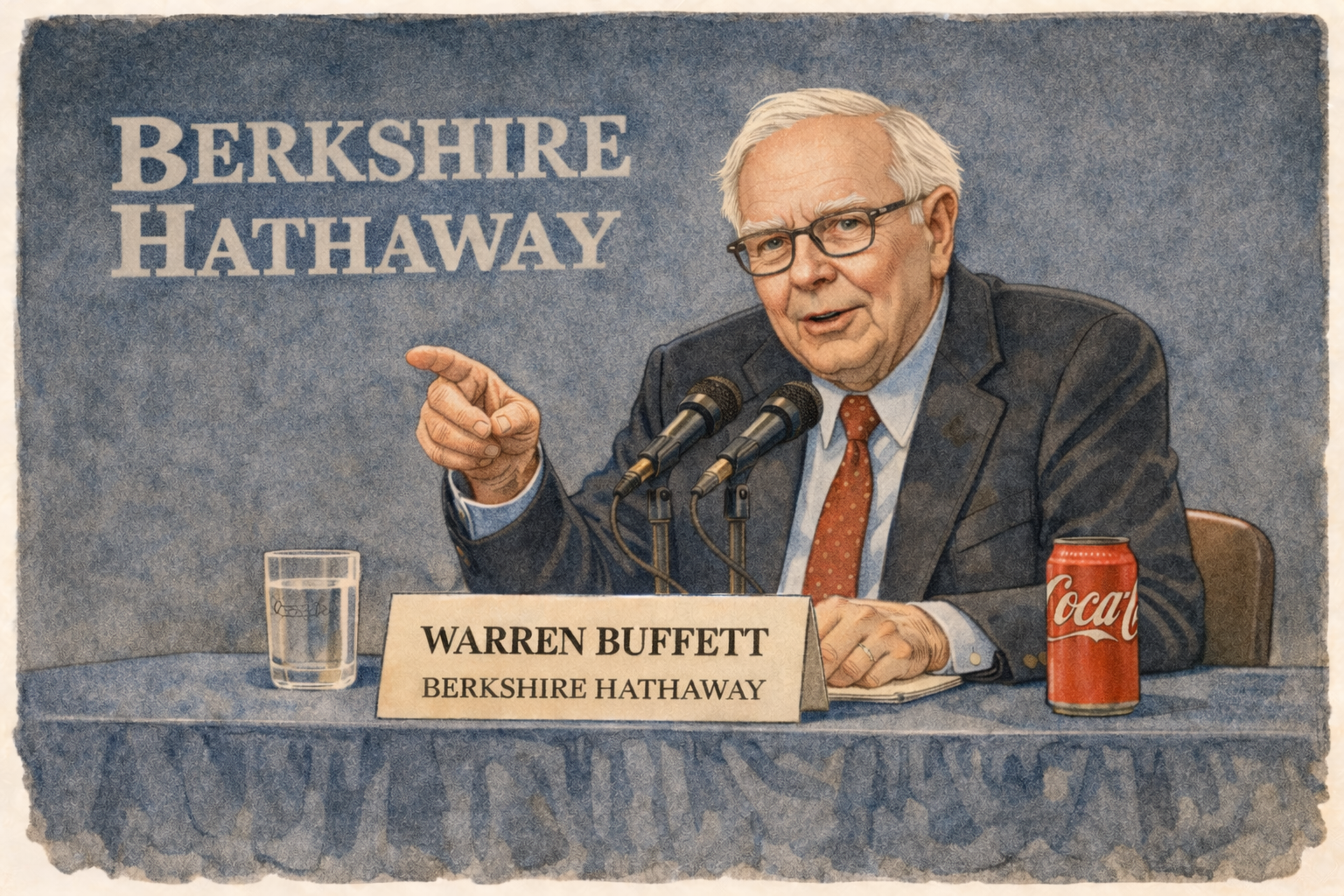
Warren Buffett
INVESTOR AND PHILANTHROPIST
Universally recognized as perhaps the most successful investor in history, known for transforming a struggling textile company into a $900 billion conglomerate, his decades-long partnership with Charlie Munger, and his legendary ability to distill complex business decisions into folksy common sense. Buffett brought patience, intellectual honesty, and moral clarity to everything from capital allocation to corporate governance to the question of what makes a life well lived.